
Legal Tech / AI SaaS
AI Legal Platform for Litigation Workflows
Designing an AI-powered legal platform that transformed complex litigation workflows into a clear, scalable product experience.
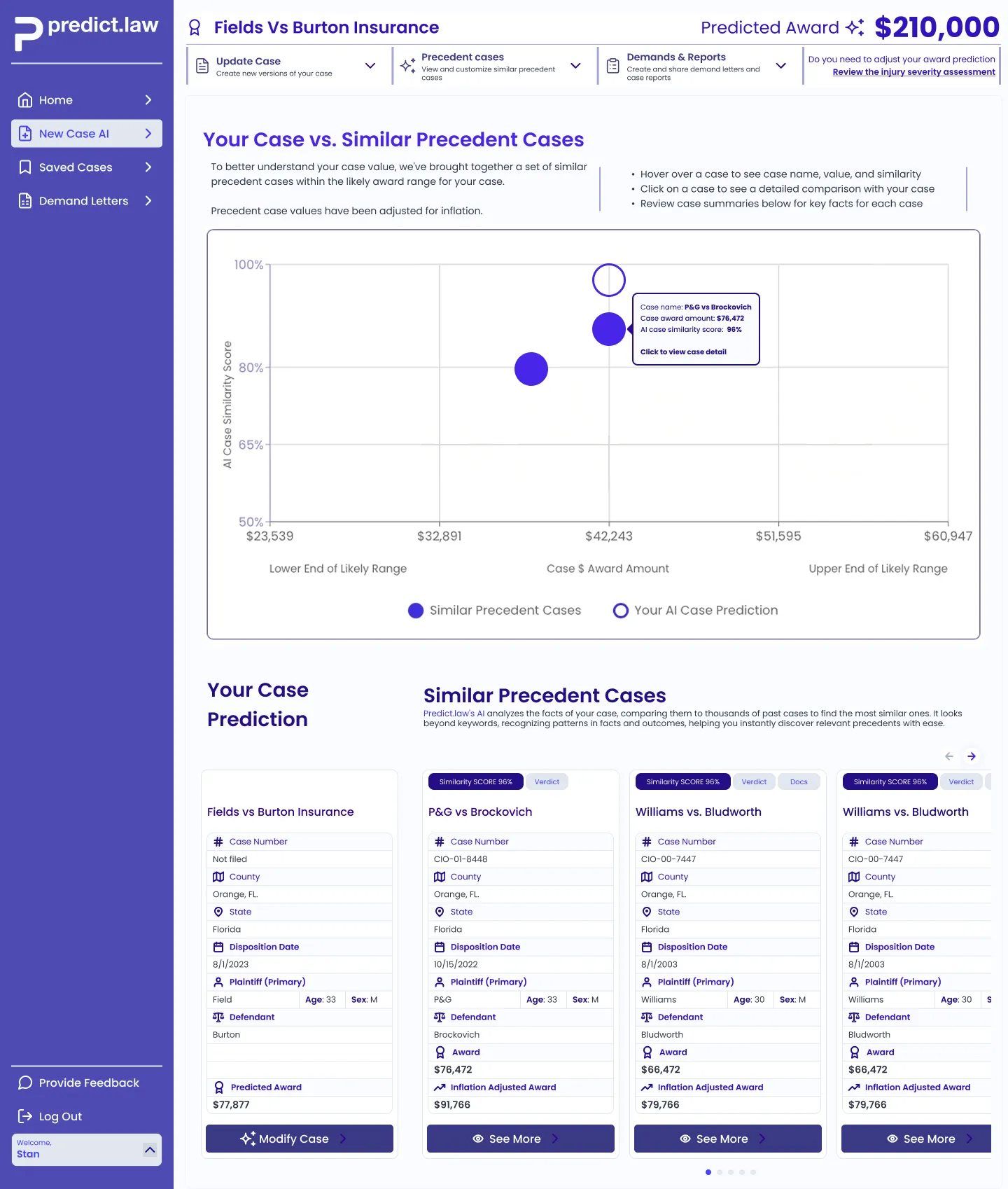
Predict.Law is an AI platform built for plaintiff attorneys to estimate case value, compare legal precedents, generate demand letters, and streamline litigation workflows.
Design highlights
What changed in the experience.
Design system built from ~100 screens
Core litigation workflows redesigned
Mobile-first acquisition flows
Continuous engineering collaboration
Marketing site and positioning input
Project Overview
During approximately 14 months as Lead Product Designer, I worked across multiple areas of Predict.Law, collaborating closely with founders, product stakeholders, and engineering to translate complex legal and machine-learning capabilities into experiences attorneys could understand and use with confidence. Rather than focusing on isolated screens, my work centered on improving the product as a complete system.
My Role
I worked across product strategy, UX architecture, interaction design, design systems, and workflow simplification, collaborating continuously with technical and business stakeholders as the product evolved.
The Challenge
The application had grown to roughly one hundred desktop screens with no structured design system, producing UI inconsistency and unpredictable implementation. Many of the core workflows also carried highly technical legal and machine-learning concepts that needed to become usable for experienced attorneys without losing their usefulness.
Design Process
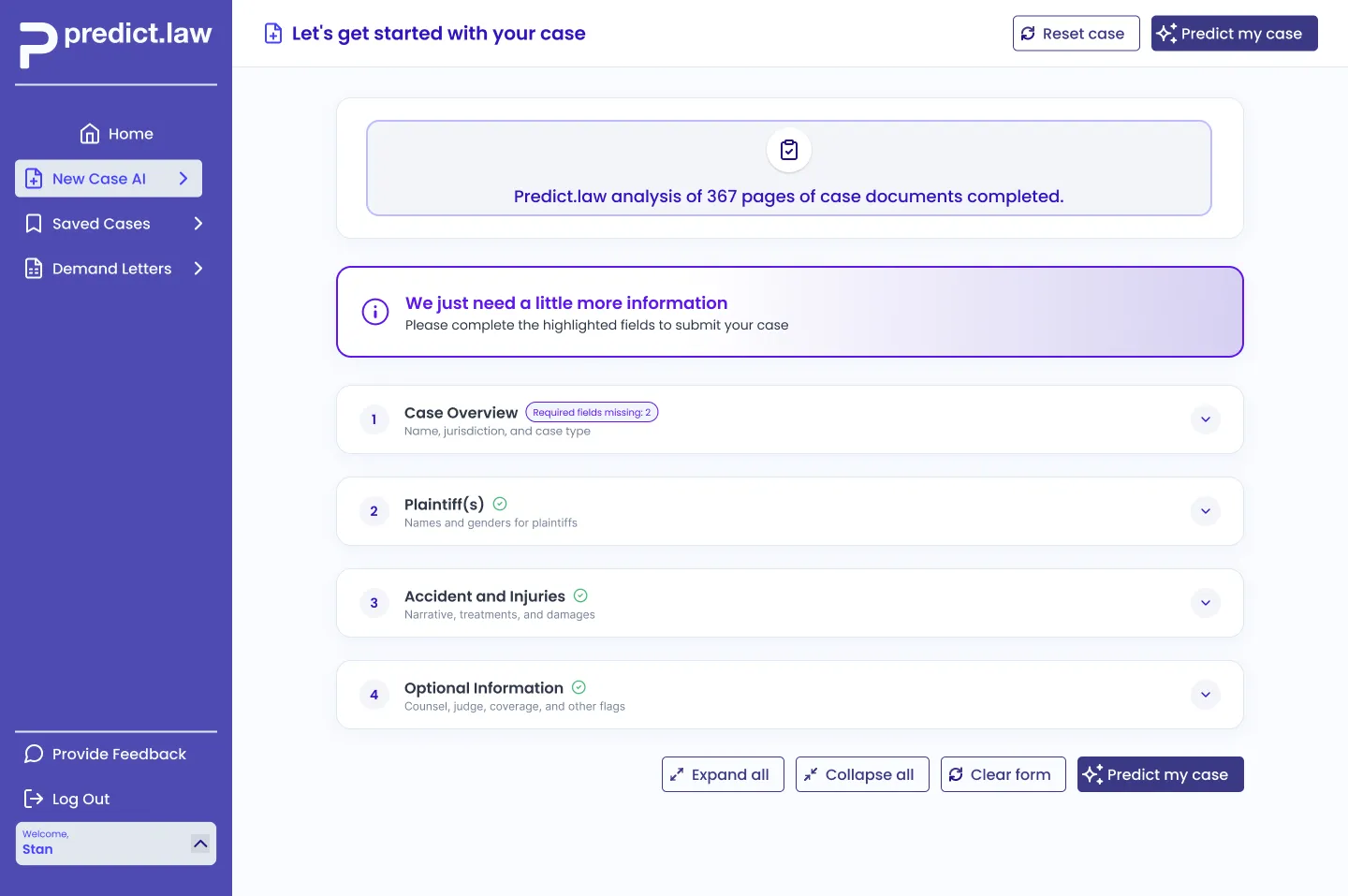
I audited the growing application, consolidated the interface into a structured design system, and standardized components, typography, spacing, color tokens, and interaction patterns, creating a more maintainable foundation for future development. Throughout the project I produced high-fidelity prototypes, interaction specifications, and developer-ready designs in Figma, working continuously with engineering to clarify implementation details, reduce ambiguity, and iterate as new business requirements emerged.
Solution
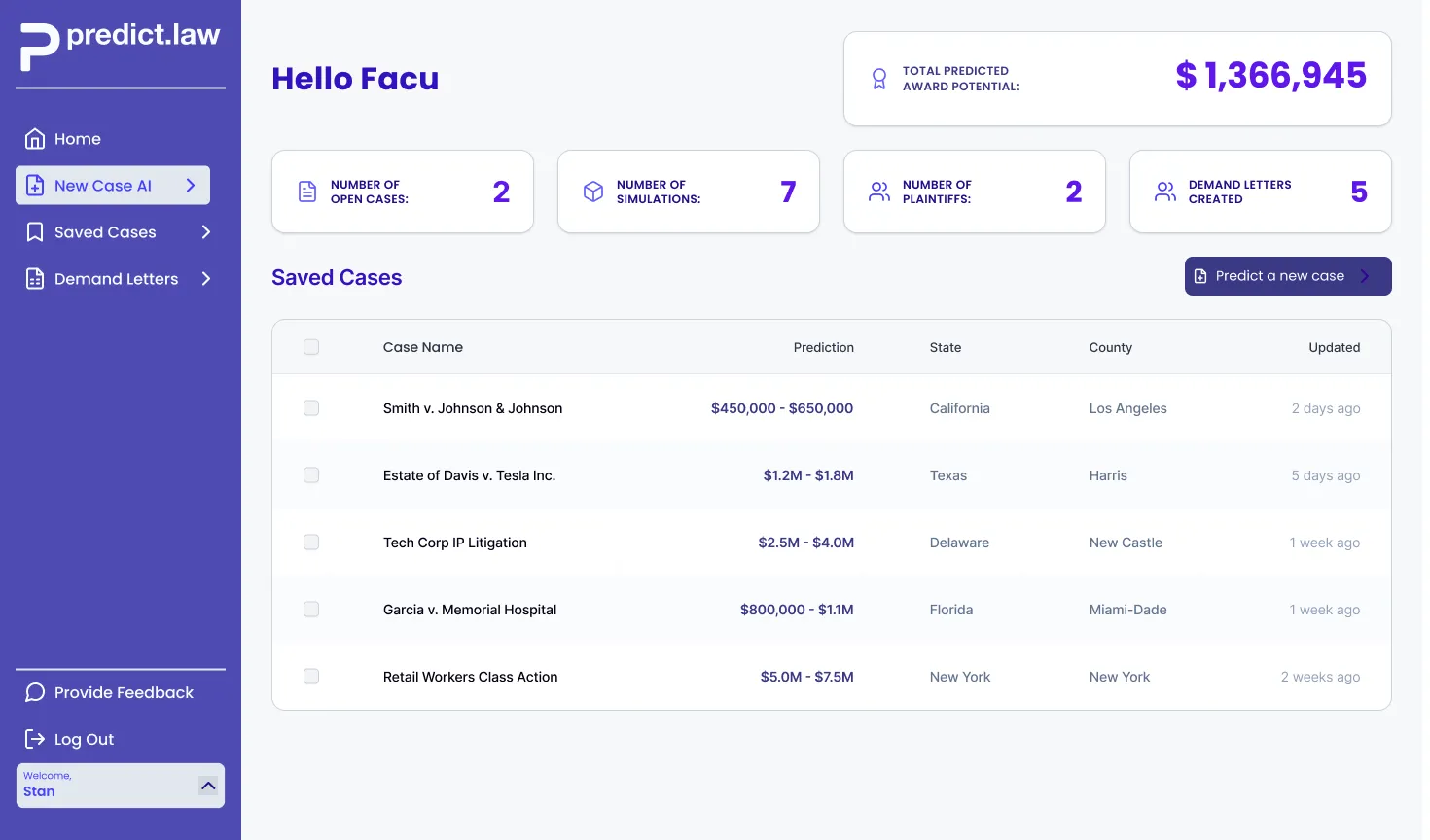
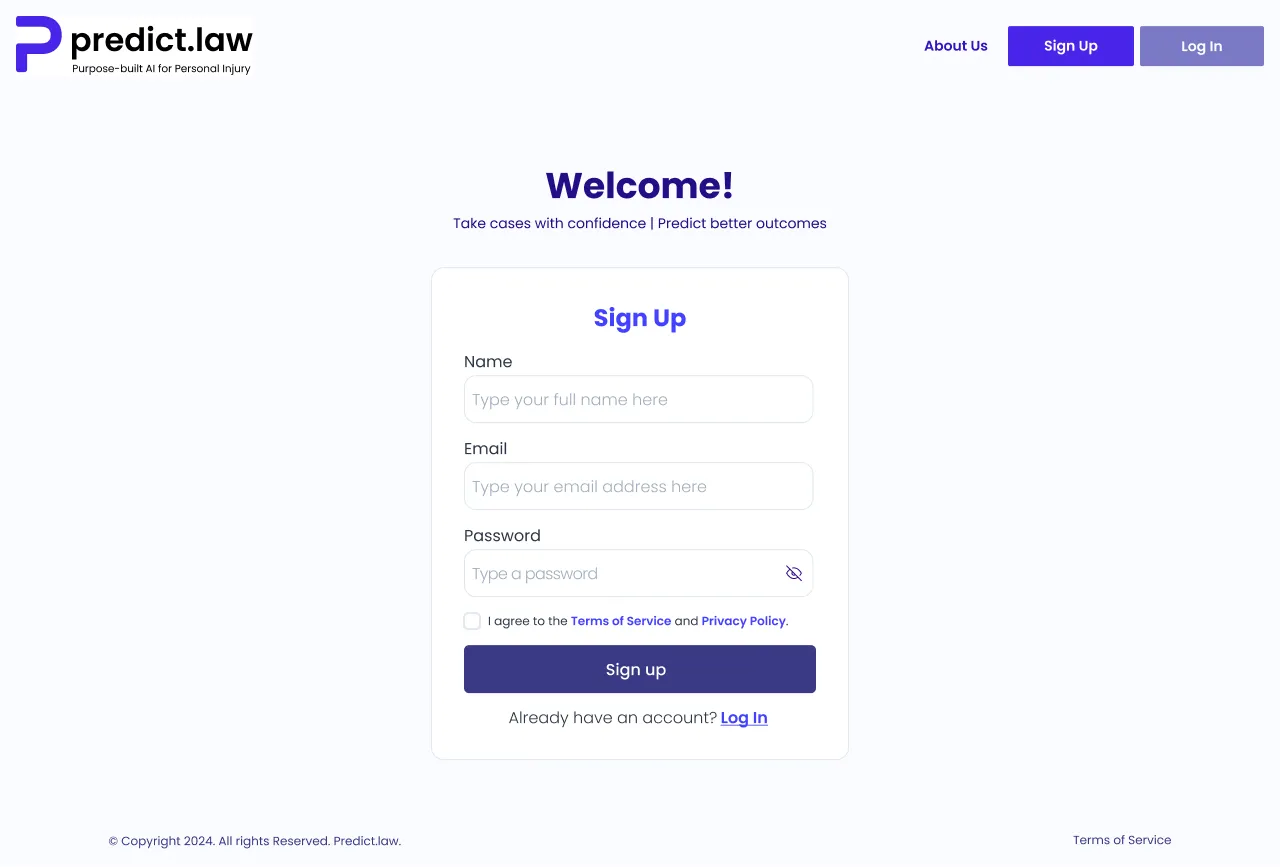
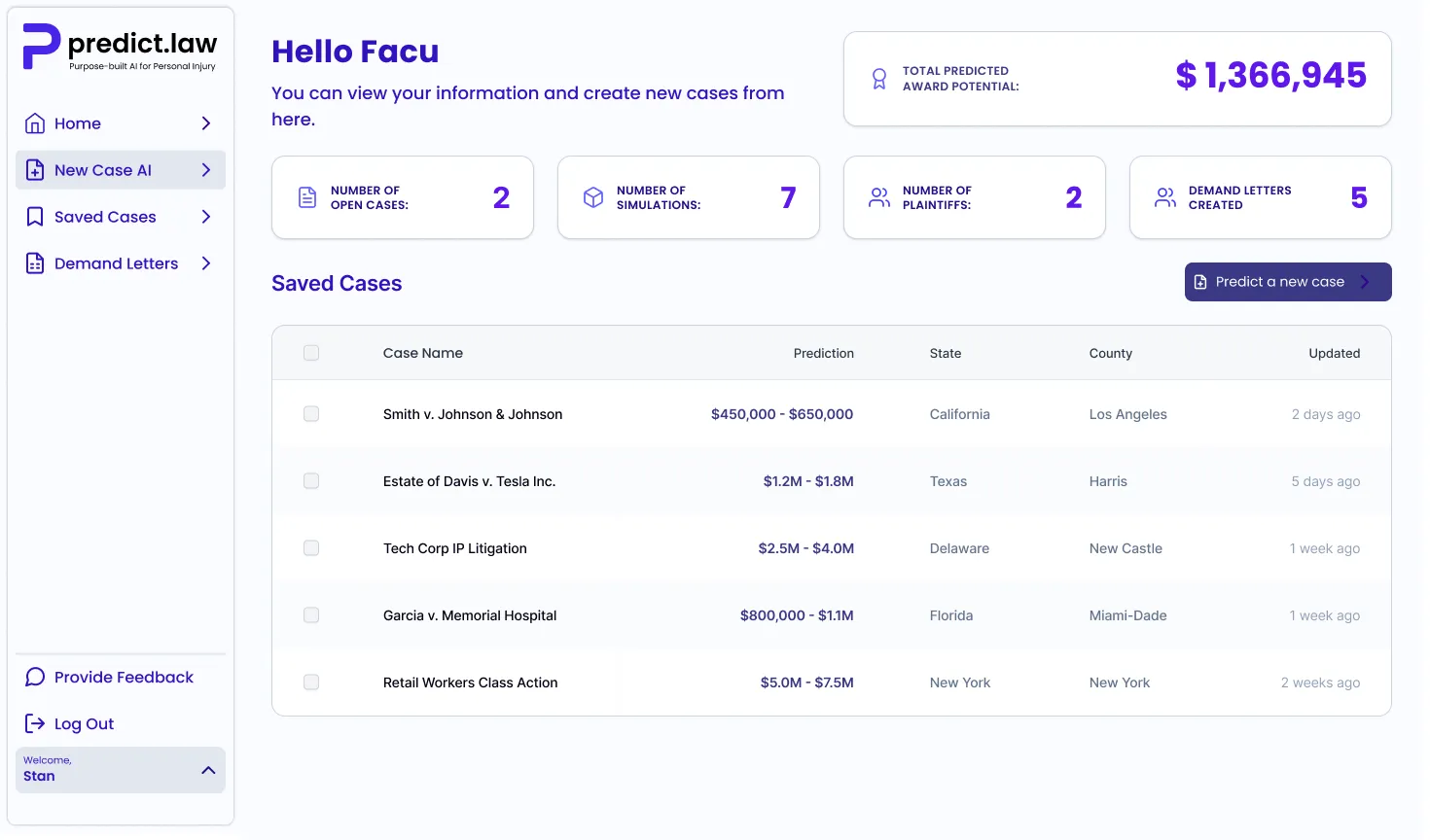
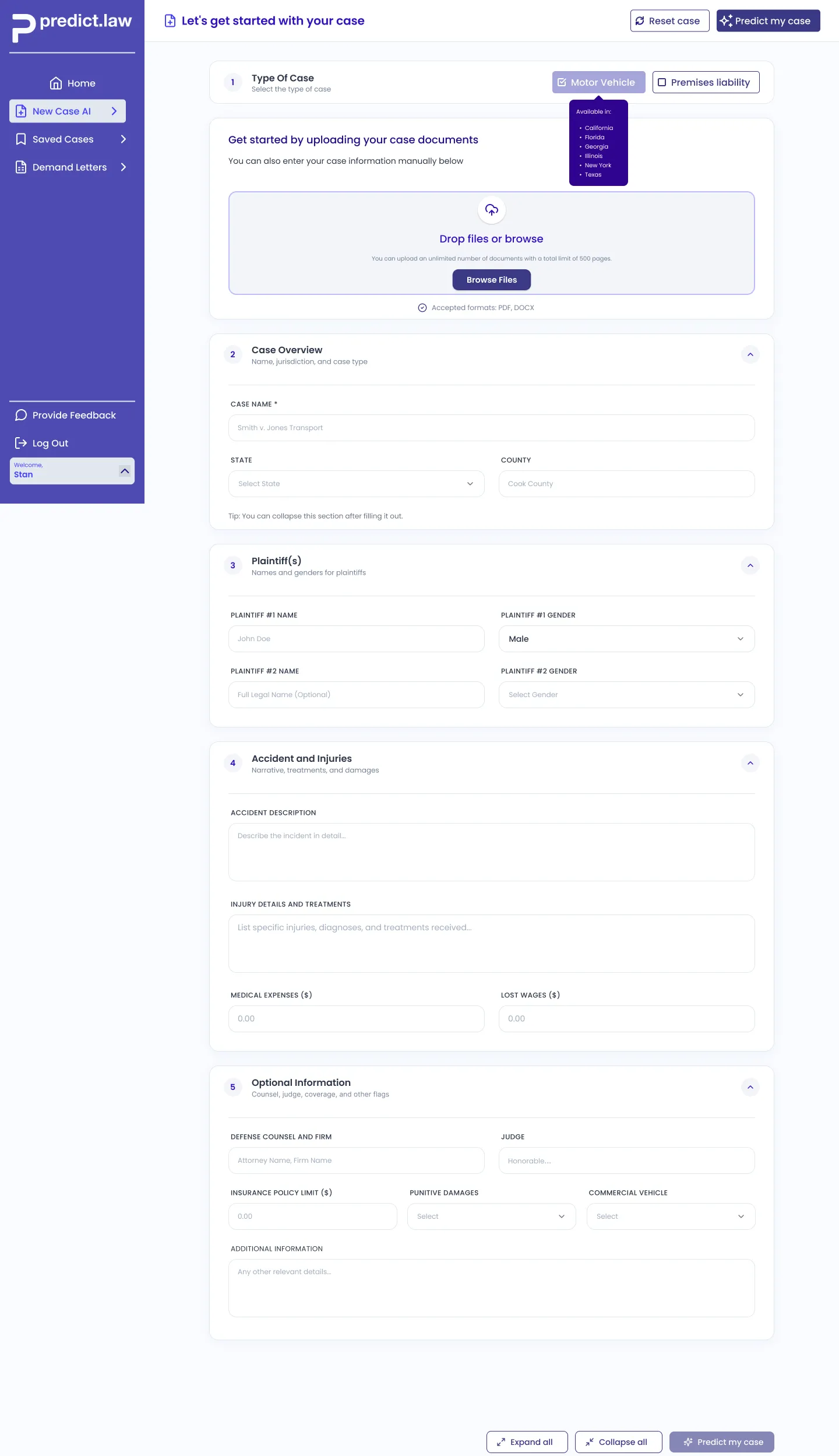
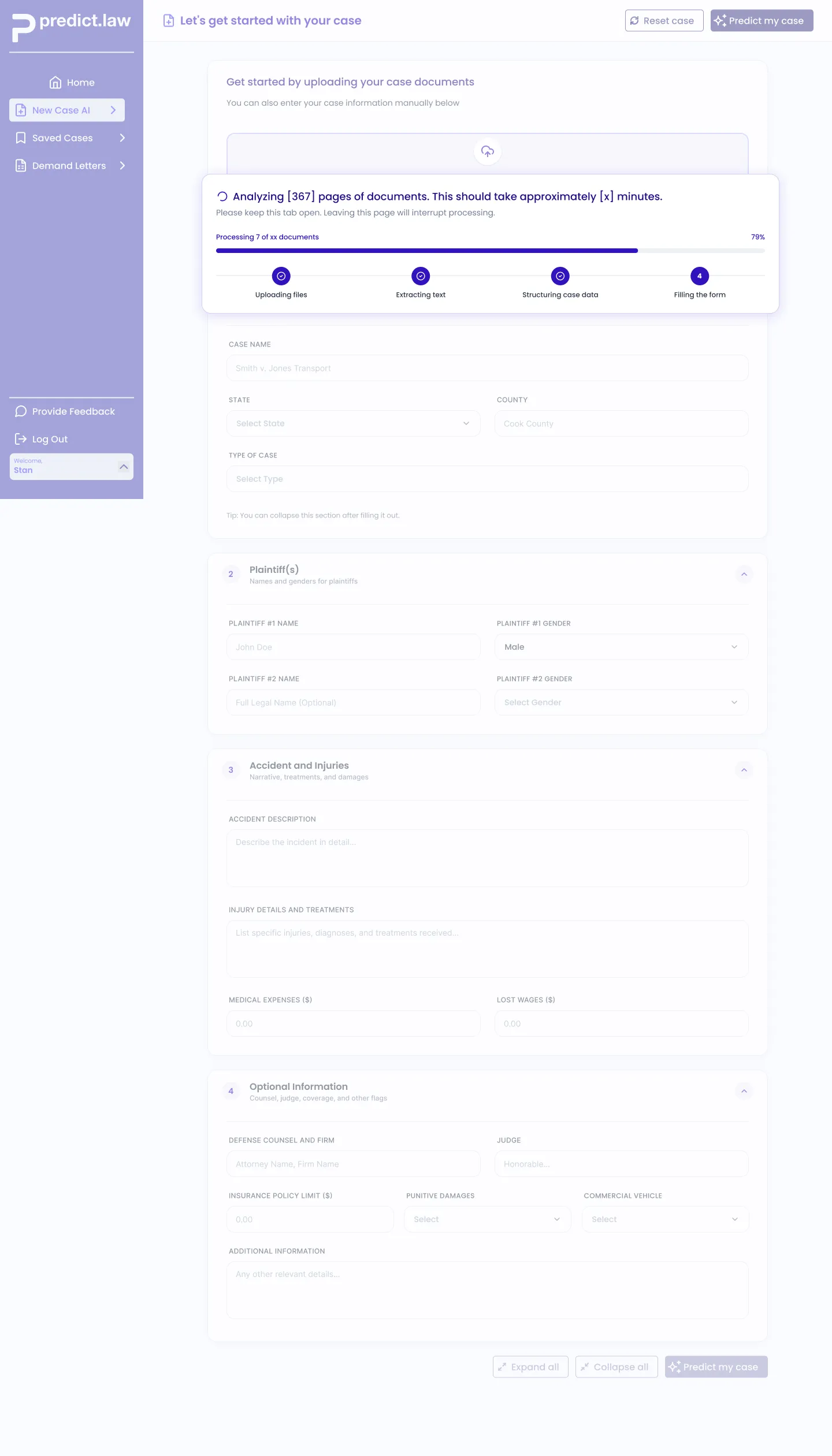
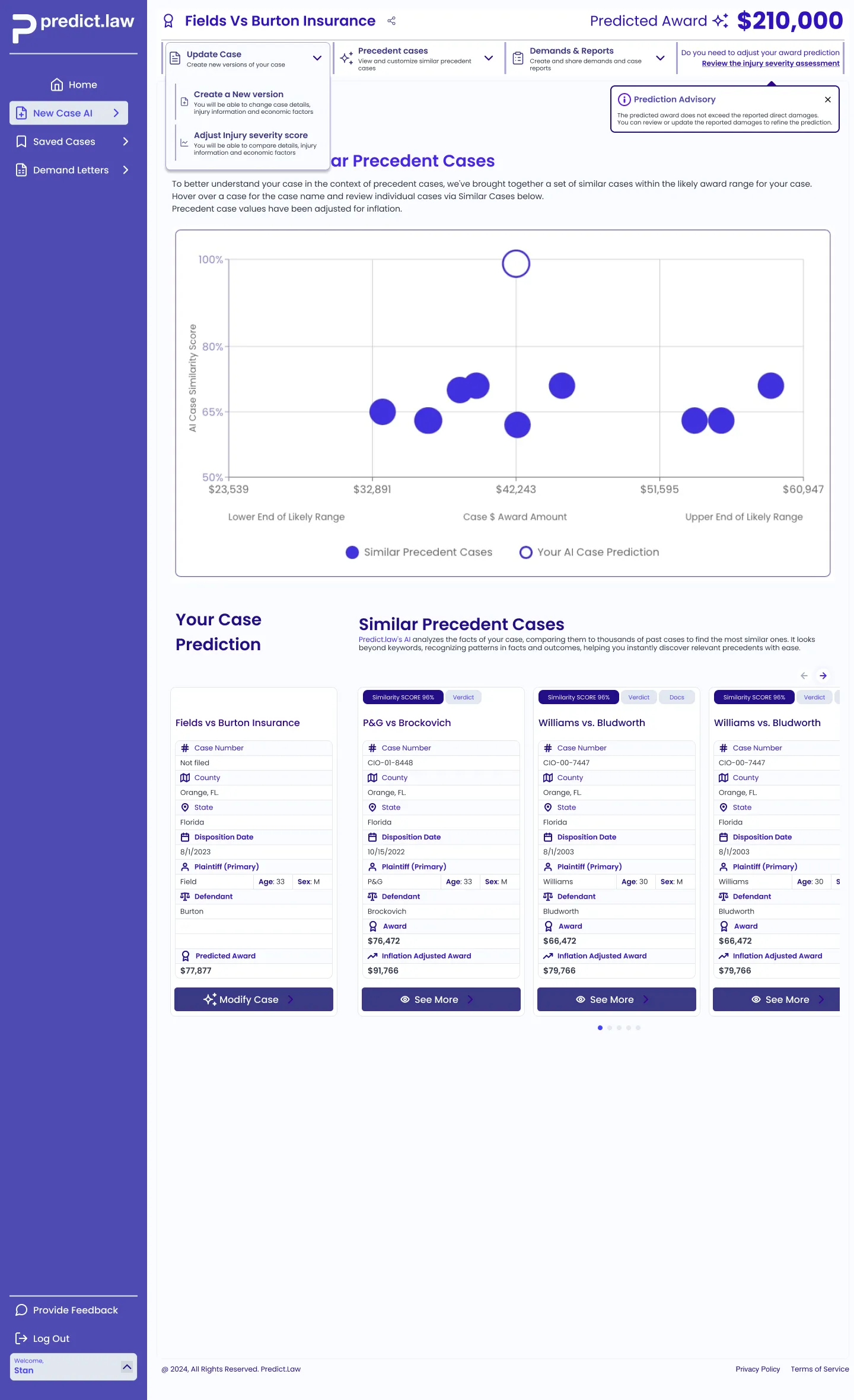
I redesigned critical product workflows including onboarding, case creation, proposal generation, AI-powered case evaluation, demand letter generation, and supporting user journeys, simplifying highly technical legal concepts without reducing their usefulness for experienced attorneys. As the product evolved, I also designed new mobile-first acquisition experiences focused on reducing time-to-value: lightweight landing experiences, trust-building interactions, no-login entry points, speech-to-text concepts, and rapid case estimation flows intended to increase adoption before requiring full registration. In parallel, I contributed to evaluating the marketing website and product positioning, identifying opportunities to improve credibility, information architecture, navigation, proof hierarchy, and the presentation of the platform's AI capabilities.
Depth
What was complex about Predict.Law, and what I helped clarify.
- The application had grown to roughly one hundred desktop screens with no structured design system, producing UI inconsistency and unpredictable implementation.
- Core workflows carried highly technical legal and machine-learning concepts that needed to become usable for experienced attorneys without losing their usefulness.
- New mobile-first acquisition flows needed to reduce time-to-value before requiring full registration.
- How to consolidate the interface into a structured design system with standardized components, tokens, and interaction patterns.
- How core workflows, onboarding, case creation, proposal generation, AI case evaluation, and demand letters, should be sequenced and simplified.
- How lightweight, no-login entry points and rapid case estimation could increase adoption before registration.
Consolidated a roughly hundred-screen application into a structured, maintainable design system, redesigned the core litigation workflows, and shipped new mobile-first acquisition experiences that reduced time-to-value, while working continuously with engineering to keep implementation aligned with evolving business requirements.
Outcome
Over the course of the engagement, the role extended well beyond UI design. It combined product strategy, UX architecture, interaction design, design systems, workflow simplification, and close collaboration with technical and business stakeholders to help evolve Predict.Law into a more coherent, scalable, and user-centered AI product.
Solution visuals
Screens and visual references from Predict.Law.
Related work
Adjacent projects.
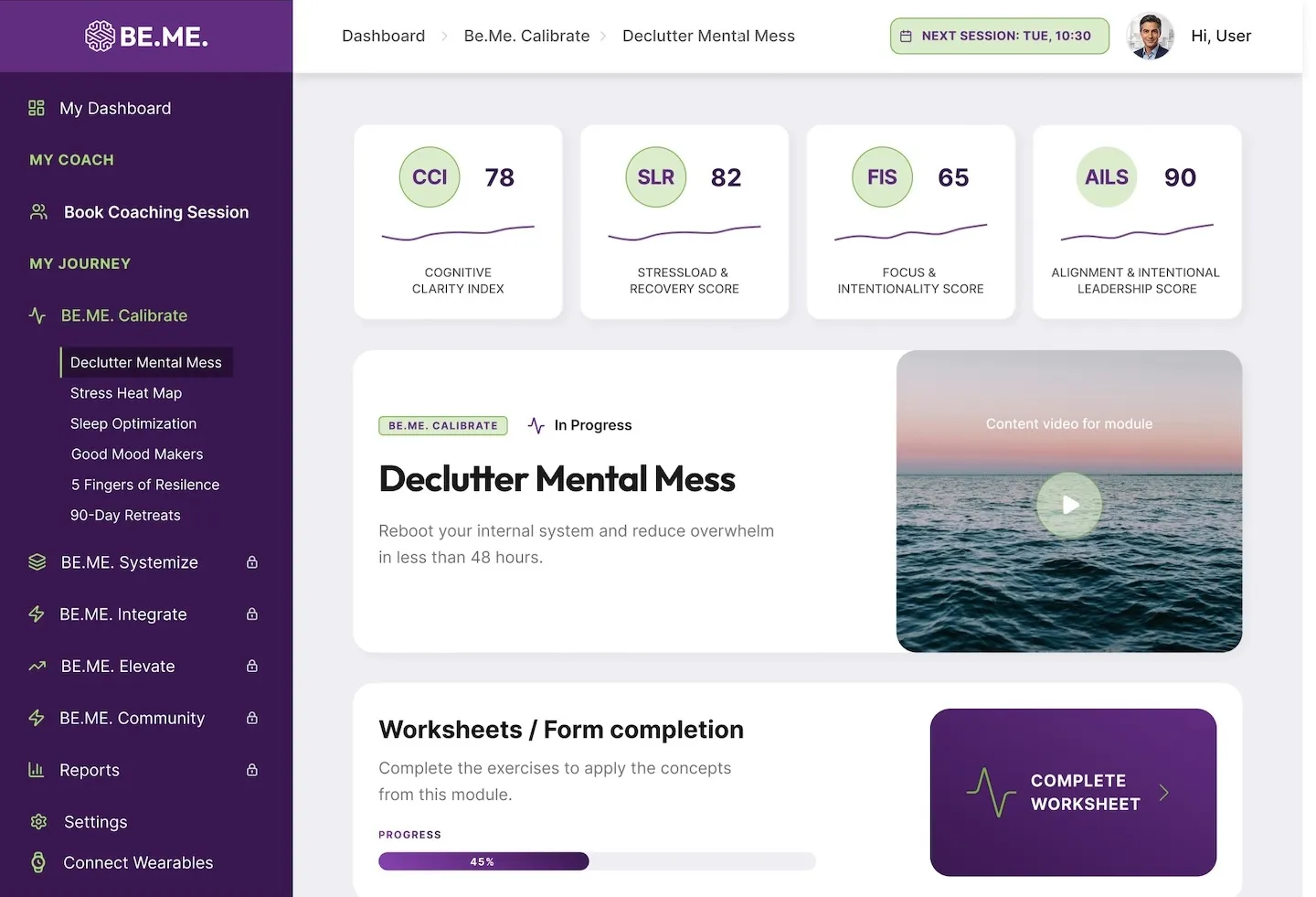
Mental Health Hybrid app
An early-stage AI product shaped from a human-performance methodology into a complete MVP experience with onboarding, dashboard structure, daily workflows, and Aura as an integrated product guide.
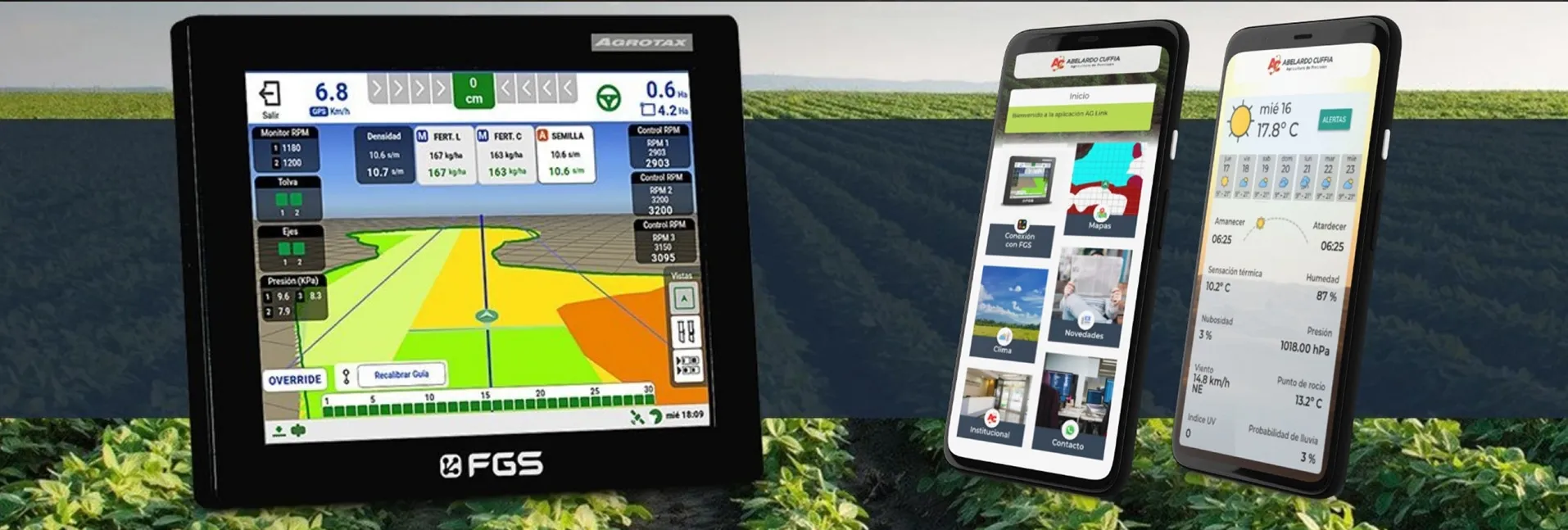
Precision Agriculture Platforms
A mobile companion application connected to the FGS precision agriculture platform, designed for operators to access real-time equipment information and make faster decisions directly from the field.